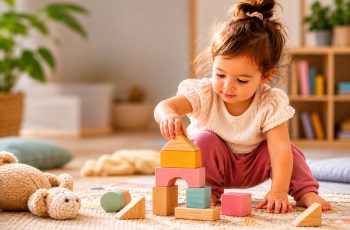
Aistear and Síolta children rights Ireland are central to how early childhood education is designed and delivered across the country. These two national frameworks work together to ensure that children are not only cared for, but respected as active participants in their own learning, reinforcing a rights-based and child-centred approach in Early Learning and Care (ELC) settings.
In Ireland, early childhood education is guided by two key frameworks: Aistear and Síolta. Together, they create a foundation for delivering high-quality, child-centred care that aligns with the principles of children’s rights. Rather than focusing solely on academic outcomes, these frameworks emphasize the holistic development of the child—emotionally, socially, physically, and cognitively—while ensuring that each child’s voice and individuality are respected.
Understanding Aistear: The Curriculum Framework
Aistear, developed by the National Council for Curriculum and Assessment (NCCA), is Ireland’s early childhood curriculum framework. It is built around four key themes:
- Well-being
- Identity and Belonging
- Communicating
- Exploring and Thinking
These themes reflect a deep understanding that learning in early childhood is not linear or standardized. Instead, it is shaped by relationships, experiences, and play.
Aistear and Children’s Rights
Aistear supports children’s rights by:
- Encouraging child-led learning
- Valuing the child’s interests and choices
- Promoting active participation
- Recognizing play as a fundamental right
In practice, this means that children are not passive learners—they are co-creators of their own learning experiences.
Understanding Síolta: The Quality Framework
While Aistear focuses on what children learn, Síolta focuses on how well the environment supports that learning. Síolta is Ireland’s national quality framework for early childhood education and includes 16 standards covering areas such as:
- Relationships
- Play
- Curriculum
- Environment
- Professional practice
Síolta and Rights-Based Practice
Síolta reinforces children’s rights by ensuring that:
- Environments are safe and inclusive
- Relationships are respectful and nurturing
- Practices are reflective and responsive
It pushes practitioners to go beyond routine care and engage in intentional, ethical practice.
How Aistear and Síolta Work Together
Aistear and Síolta are not separate systems—they are designed to complement each other.
- Aistear provides the vision for learning
- Síolta ensures the quality of that experience
Together, they create a structure where:
- Children are respected as individuals
- Learning is meaningful and play-based
- Practitioners are reflective and intentional
This integration is what makes the Irish ELC system increasingly aligned with a rights-based approach.
From Theory to Practice
The real strength of these frameworks lies in how they are applied in everyday settings.
Example 1: Child-Led Play
Instead of directing activities, practitioners observe children’s interests and extend their learning through play.
Example 2: Listening to the Child
Children are encouraged to express preferences, make choices, and influence their environment.
Example 3: Emotional Wellbeing
Strong relationships and secure attachments are prioritized, recognizing emotional safety as essential for learning.
Challenges in Implementation
Despite their strengths, challenges still exist.
1. Inconsistent Application
Not all settings apply Aistear and Síolta with the same depth or understanding.
2. Time and Resource Constraints
High-quality practice requires time, training, and support.
3. Adult Mindset
Some practitioners may still operate from a directive, adult-centred approach.
Aistear and Síolta children rights: A Cultural Shift in Early Education
Aistear and Síolta represent more than frameworks—they represent a shift in mindset. They ask educators to move from:
- controlling → guiding
- instructing → listening
- managing → connecting
This shift is essential for truly respecting children’s rights.
Conclusion
Aistear and Síolta play a critical role in embedding children’s rights into early childhood education in Ireland. Together, they ensure that children are not only supported, but genuinely seen, heard, and valued. However, their impact depends on how deeply practitioners engage with their principles. When applied with intention, these frameworks transform not only learning environments but the experience of childhood itself.
Read more:
- UNCRC Ireland Children Rights: How It Shapes Policy and Practice
- Ethical AI Examples: How Machines Learn Ethics
Frequently Asked Questions – Aistear and Síolta children rights
What is the difference between Aistear and Síolta?
Aistear is the curriculum framework, while Síolta focuses on quality standards in early childhood settings.
How do these frameworks support children’s rights?
They promote child-led learning, respect for individuality, and active participation.
Are Aistear and Síolta mandatory in Ireland?
They are national frameworks that guide best practice and are widely implemented across ELC settings.
Why are these frameworks important?
They ensure that early childhood education supports holistic development and respects children as active learners.
References
- NCCA (2009). Aistear: The Early Childhood Curriculum Framework
- Centre for Early Childhood Development and Education (2006). Síolta: The National Quality Framework
- Department of Children, Equality, Disability, Integration and Youth (DCEDIY)
- United Nations (1989). Convention on the Rights of the Child