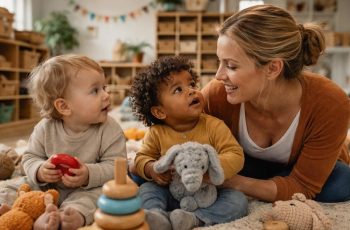
UNCRC Ireland children rights play a fundamental role in shaping how children are protected, heard, and supported within Irish society. The United Nations Convention on the Rights of the Child (UNCRC) has significantly influenced national legislation, policy development, and early childhood practices in Ireland, reinforcing the idea that children are not just recipients of care, but individuals with their own rights, voices, and agency.
The recognition of children as rights-holders rather than passive recipients of care represents one of the most significant shifts in modern society. The United Nations Convention on the Rights of the Child (UNCRC) is at the centre of this transformation, influencing how countries design policies, laws, and practices concerning children.
In Ireland, the UNCRC has played a crucial role in reshaping national legislation and early childhood practices. This article explores how international principles translate into real-life impact, particularly within Early Learning and Care (ELC) settings.
What is the UNCRC?
Adopted in 1989, the UNCRC is the most widely ratified human rights treaty in the world. It establishes that children are individuals with their own rights, including:
- The right to protection
- The right to provision
- The right to participation
These rights emphasize that children should not only be cared for but also heard, respected, and actively involved in decisions that affect their lives.
Ireland and the UNCRC
Ireland ratified the UNCRC in 1992, committing to align its laws and policies with its principles. However, the integration of children’s rights into Irish legislation has been gradual. A major milestone was the Thirty-First Amendment of the Constitution (2012), which formally recognized children as rights-holders within Irish law. This amendment marked a shift from viewing children primarily within the family structure to acknowledging their independent rights.
Impact on National Legislation
The influence of the UNCRC can be seen in several key legislative and policy developments in Ireland:
1. Child Protection Frameworks
Organizations such as Tusla operate within a rights-based framework influenced by the UNCRC. Policies like Children First: National Guidance for the Protection and Welfare of Children reflect the principle that the child’s welfare is paramount.
2. Education Policies
The Irish education system increasingly recognizes children’s participation rights, encouraging active learning and inclusion.
3. Early Years Regulations
Regulatory frameworks governing Early Learning and Care services emphasize:
- Safety and wellbeing
- Holistic development
- Respect for the child’s voice
Impact on Early Learning and Care (ELC)
The UNCRC’s influence becomes particularly visible in everyday practice within ELC settings. Frameworks such as Aistear and Síolta embody the principles of the UNCRC by promoting:
- Child-led learning
- Respect for individuality
- Emotional wellbeing
- Play as a fundamental right
Rather than imposing rigid structures, these frameworks encourage educators to observe, listen, and respond to each child’s needs and interests.
Challenges and Gaps
Despite significant progress, challenges remain.
1. Implementation Gap
There is often a difference between policy and practice. While legislation supports children’s rights, real-world implementation can vary depending on resources, training, and institutional culture.
2. Adult-Centred Systems
Many systems still operate from an adult-centric perspective, where children’s voices are acknowledged but not always prioritized.
3. Training and Awareness
Ensuring that all practitioners fully understand and apply a rights-based approach remains an ongoing challenge.
A Shift in Perspective
At its core, the UNCRC demands a shift in how society sees children. Not as future adults. But as present individuals with valid experiences, opinions, and rights. This shift requires more than policy, it requires a transformation in mindset.
Conclusion
The UNCRC has significantly influenced Irish legislation and early childhood practice, embedding the idea that children are rights-holders. However, the journey from policy to practice is ongoing. To fully realize the vision of the UNCRC, Ireland must continue investing in training, awareness, and systems that genuinely listen to children. Because when children are heard, respected, and empowered, society as a whole evolves.
Read more:
- The Invisible Mother: Rediscovering Identity Beyond Caregiving
- Boy Mom: The Joys and Challenges of Being a Boy Mom
Frequently Asked Questions – UNCRC Ireland Children Rights
What is the main purpose of the UNCRC?
To ensure that all children have rights related to protection, provision, and participation.
When did Ireland adopt the UNCRC?
Ireland ratified the UNCRC in 1992.
How does the UNCRC affect early childhood education?
It promotes child-centred approaches, respect for children’s voices, and holistic development.
What are the biggest challenges in applying the UNCRC?
Bridging the gap between policy and real-world practice, and shifting adult-centred perspectives.
References
- United Nations (1989). Convention on the Rights of the Child
- Department of Children, Equality, Disability, Integration and Youth (DCEDIY)
- Tusla (2017). Children First: National Guidance
- NCCA (2009). Aistear: The Early Childhood Curriculum Framework
- Early Childhood Ireland (2006). Síolta: National Quality Framework